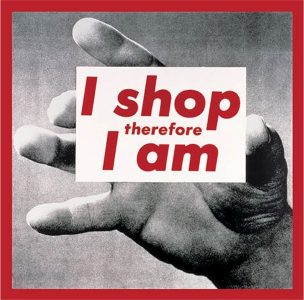
Le monde moderne n’est pas universellement prostitutionnel par luxure. Il en est bien incapable. Il est universellement prostitutionnel parce qu’il est universellement interchangeable.
Charles Péguy
According to its website, OnlyFans is a “social platform revolutionizing creator and fan connections. The site is inclusive of artists and content creators from all genres and allows them to monetize their content while developing authentic relationships with their fanbase.” As is well understood, most of its “content creators” produce pornography. Or, at the very least, amateur pornographic production is what OnlyFans is most known for: users can pay a price to see the nudes and sexcapades of these content creators.
Over the past few weeks, however, OnlyFans made a few stunning reversals. It firstly announced that it would no longer allow pornographic content on its site, citing pressure from banks and investors. It goes without saying that this represented a slap (and not one of those kinky slaps) in the face of many of its content creators. After all, the sex work of these creators is precisely what propelled OnlyFans into the mainstream in the first place. OnlyFans was briefly revealed as a greedy pimp which cared little about discarding its prostitutes.
But then came another volte-face. Via Twitter, OnlyFans declared that it had “secured assurances necessary to support our diverse creative community and have suspended the planned policy change.” In other words, OnlyFans’s banking partners allowed the site to continue hosting pornographic content.
Now, the intention here shouldn’t be to attack OnlyFans for succumbing to monetary pressure or to defend their original decision as prudent (and prude?), but to point out that this whole predicament is reflective of the broader economy as a whole. All corporations are pimps, and all workers are prostitutes (isn’t this notion almost a cliche nowadays?). Sex work, then, is revealed as a mere subcategory of general work, and one which isn’t even worthy of raised eyebrows anymore in our “sexually liberated” era. If one criticizes OnlyFans for treating its (sex) workers as disposable, one must criticize all companies for viewing their respective workers as throwaways. The original backlash against OnlyFans was therefore in some ways irrational and naive: what else can one expect from corporations?
The solution, again (and again and again), would be worker-ownership of the means of production. In this case, that implies that online sex workers should have direct and democratic access to the websites through which they do their (sex) work. Because they don’t (i.e. because OnlyFans is privately owned and operated), reversals (and reversals of reversals) like these are able to happen in the first place, damning erotic laborers to an infinite state of precariousness. Online sex workers will only be genuinely liberated when they collectively own and manage the online platforms through which they publish their content. The sex workers have nothing to lose but their chains (and their fuzzy handcuffs, bondage harnesses, chastity devices, etc.)!

Let’s take a moment to make a volte-face of our own though. With a generalized move towards socialism (towards an economy that is owned by, and not alienated from, those who produce it), would there be a need or even a desire for sex work? Sex workers do what they do in order to make money, in order to survive and perhaps even to thrive within an unforgiving capitalist economy. In a socialist economy, it is at least unclear whether or not people would resort to sex work for the same reasons. In a more general sense, it is unclear whether people would have any desire to work at all in the traditional sense, at least insofar as creativity is the opposite of work. Perhaps, when the means by which we can create are actually accessible, the desire for things (acquired through work) will be replaced with a passion for creation. One comrade puts it like this:
The traditional revolutionary program involved a reclaiming of the world, an expropriation of the expropriators, a violent appropriation of that which is ours, but which we have been deprived of. But here’s the problem: capital has taken hold of every detail and every dimension of existence. It has created a world in its image. From being an exploitation of the existing forms of life, it has transformed itself into a total universe. It has configured, equipped, and made desirable the ways of speaking, thinking, eating, working and vacationing, of obeying and rebelling, that suit its purpose. In doing so, it has reduced to very little the share of things in this world that one might want to reappropriate. Who would wish to reappropriate nuclear power plants, Amazon warehouses, the expressways, ad agencies, high-speed trains, Dassault, La Defense business complex, auditing firms, nanotechnologies, supermarkets and their poisonous merchandise? Who imagines a people’s takeover of industrial farming operations where a single man plows 400 hectares of eroded ground at the wheel of his megatractor piloted via satellite? No one with any sense.
Now, Julien Coupat
To add one more to the list: who would really wish to reappropriate the website of OnlyFans? A socialist economy won’t emerge merely in order to meet our material needs but also to realize our social desires. The problem is that our genuine desires are obscured under the weight of capitalism and replaced with false, vapid ones. Commodities (and even sexual commodities) emerge as (false) objects of desire only because they distract us from the work to which we are forcibly subjected. Only with the abolition of the current mode of production can our wild passions, eclipsing the empty cravings of commodity society, be truly liberated.

In an oft-forgotten segment of the Communist Manifesto, Karl Marx makes this interesting series of remarks:
The bourgeois sees in his wife a mere instrument of production. He hears that the instruments of production are to be exploited in common and, naturally, can come to no other conclusion than that the lot of being common to all will likewise fall to the women.
The Communist Manifesto, Karl Marx
He has not even a suspicion that the real point aimed at is to do away with the status of women as mere instruments of production.
For the rest, nothing is more ridiculous than the virtuous indignation of our bourgeois at the community of women which, they pretend, is to be openly and officially established by the communists. The communists have no need to introduce community of women; it has existed almost from time immemorial.
Our bourgeois, not content with having the wives and daughters of their proletarians at their disposal, not to speak of common prostitutes, take the greatest pleasure in seducing each other’s wives.
Bourgeois marriage is in reality a system of wives in common and thus, at the most, what the communists might possibly be reproached with is that they desire to introduce, in substitution for a hypocritically concealed, an openly legalized community of women. For the rest, it is self-evident that the abolition of the present system of production must bring with it the abolition of the community of women springing from that system, i.e., of prostitution, both public and private.
This aside from Marx should by no means imply that prostitution (online or otherwise) would be banned in a communist society. Rather, the desire for prostitution and the desire to work as a prostitute would disintegrate, both being replaced with an ejaculation of creative potential. In a communist society, sex work is not “abolished,” it withers away.
As Slavoj Zizek notes in one of his lectures, it is no longer sex that needs to be liberated, but love. Until then, let us resent our condition of work, of prostitution: our only enemy is the pimp, in all of the forms he or she takes.

 Notes from the Ultra-Left